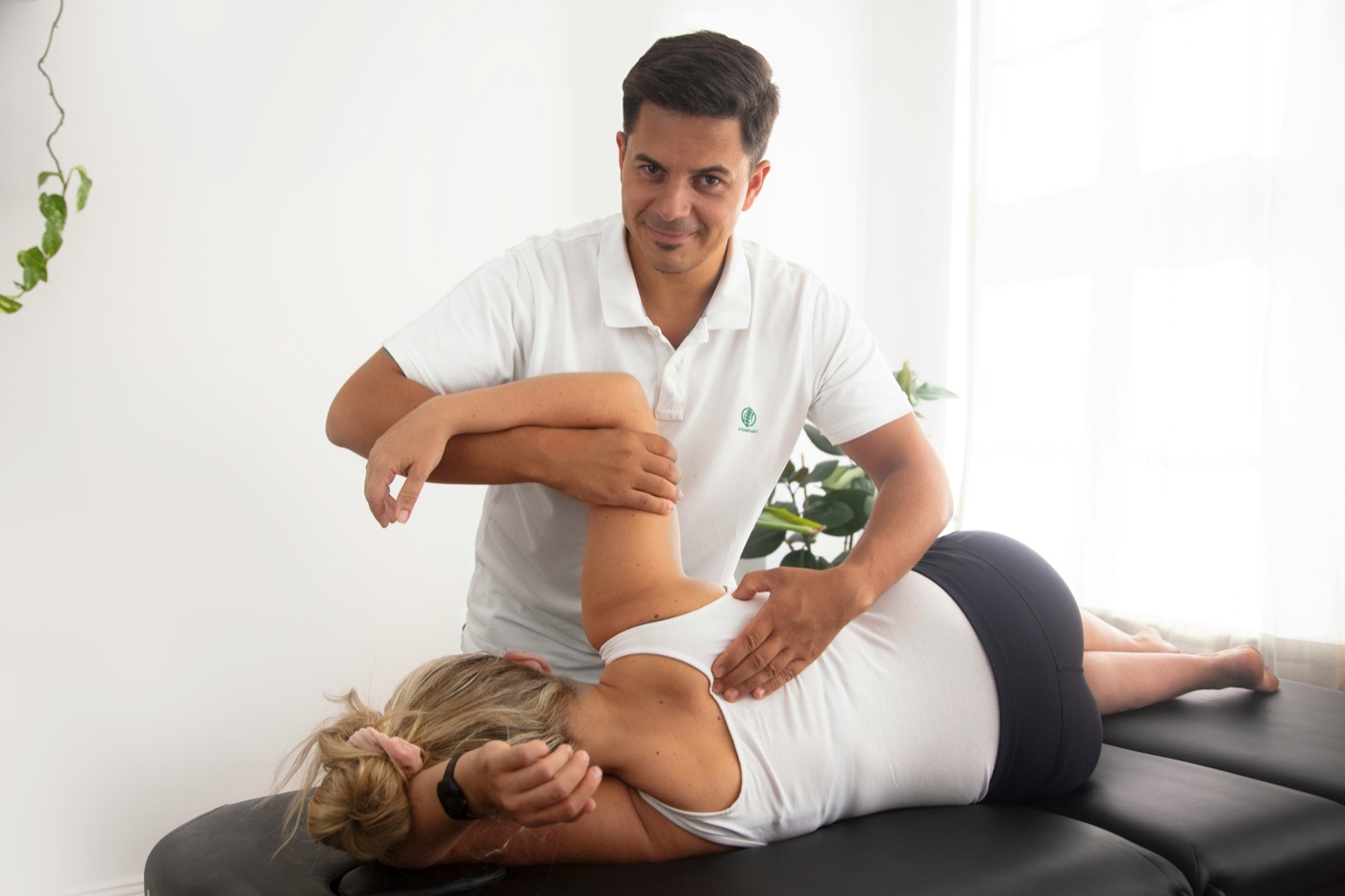
Active Release Techniques (ART®) is a patented soft-tissue system — the Gold Standard of Soft-Tissue Care® — that treats adhesions in muscles, tendons, ligaments, fascia, and nerves. Unlike broad deep-tissue massage, an ART® provider locates a specific adhesion and applies targeted tension while you actively move the tissue, disrupting it mechanically and reprogramming it neurologically. Most clients improve after one session; complex cases take four to six.
If you've been dealing with a soft-tissue problem that hasn't responded to standard massage, physical therapy, or rest, there's a good chance you've eventually come across the term "Active Release Techniques®" (ART®). Maybe your physical therapist mentioned it. Maybe you saw it on a sports medicine website. Maybe a fellow athlete swears by it.
Here's a clear explanation of what ART® actually is, how it works mechanically, who benefits most, and what a session with an ART® Certified Provider actually looks like.
What Is Active Release Techniques® (ART®)?
Active Release Techniques® is a patented soft-tissue system developed by Dr. P. Michael Leahy, a chiropractor who spent years analyzing how repetitive and acute use injuries affected the soft tissues of the body. It is widely recognized as the Gold Standard of Soft-Tissue Care® and is used by athletic trainers, physical therapists, chiropractors, and massage therapists who complete the specific certification process.
ART® treats problems with:
- Muscles, especially areas of chronic tightness or shortening from overuse
- Tendons, including tendinopathy conditions from repetitive loading
- Ligaments, particularly when scarring or adhesions have developed following injury
- Fascia: the connective tissue matrix that surrounds and connects everything
- Nerves, when nerves are entrapped or restricted by surrounding soft tissue
The Core Mechanism: Why ART® Works
Most soft-tissue injuries, whether from acute trauma, repetitive microtrauma, or constant pressure (like desk posture), result in the formation of adhesions. Adhesions are essentially areas where scar tissue, inflammatory byproducts, and restricted fascia create a zone of reduced glide between tissue layers.
These adhesions are often a major contributor to pain, restricted range of motion, nerve entrapment, and chronic "tightness" that doesn't respond to stretching or general massage. The challenge is that they're highly specific in their location. You need precise palpatory skills to find them.
This is what ART® Certified Providers are trained to do: palpate the tissue with precision, identify where adhesions are located, and apply targeted tension to that specific location while guiding the patient through active movement. As the tissue moves under the applied tension, the adhesion is mechanically disrupted. Over multiple repetitions and multiple sessions, the tissue remodels toward healthier, more mobile function.
What Makes ART® Different From Deep Tissue Massage?
Both ART® and deep tissue massage use manual pressure on soft tissue. But there are important differences:
- Deep tissue massage applies sustained, broad pressure to reduce muscle tension and improve circulation. It's highly effective for general tightness and recovery.
- ART® applies precise, targeted pressure to a specific adhesion while the tissue moves, engaging both mechanical disruption and neurological reprogramming simultaneously.
For general muscle tension and recovery, deep tissue massage is excellent. For specific adhesion patterns, especially those involving nerve entrapment or tendon dysfunction, ART® is more effective precisely because it's more specific.
Many sessions with the Dawn Wellness team combine both approaches: ART® to address specific structural restrictions, followed by broader massage work to reduce overall tension and support recovery.
"ART® isn't about applying more pressure. It's about applying the right pressure, in the right location, while the tissue does what it's supposed to do. That combination is what makes it different."
Conditions That Typically Respond Well to ART®
- Chronic IT band syndrome and lateral knee pain
- Plantar fasciitis (especially recurrent cases)
- Tennis elbow and golfer's elbow
- Rotator cuff dysfunction and shoulder impingement
- Carpal tunnel syndrome (nerve entrapment at the wrist)
- Thoracic outlet syndrome (nerve entrapment at the shoulder)
- Hip flexor restrictions in runners and cyclists
- Post-surgical scar tissue (once cleared for soft-tissue work)
- Piriformis syndrome and sciatic nerve irritation
- Chronic "tight" muscles that don't respond to stretching
What a Session Looks Like
An ART® session typically involves:
- Assessment: range of motion testing, palpation, and discussion of symptoms to locate the specific structures involved
- Treatment: the provider applies precise tension to the identified adhesion while guiding the patient through a series of active movements (hence "active" release)
- Reassessment: range of motion is checked again to verify improvement; additional areas are addressed as needed
Sessions are typically 30–60 minutes. ART® alone can be booked as a focused session, or combined with deep tissue massage for a comprehensive approach.
Most clients notice improvement after the first session, though complex or long-standing issues often require 4–6 sessions for significant resolution.
ART® in the Tampa Bay Area
Lucas Sands, Dawn Wellness's ART® Certified Provider, is available for sessions throughout St. Petersburg, Clearwater, Tampa, and the broader Pinellas and Hillsborough County area. All sessions are mobile. He comes to you.
If you're dealing with a soft-tissue issue that hasn't responded to standard approaches, ART® is worth considering. Start with a free 15-minute consultation to discuss whether it's the right fit.
Active Release Techniques® and ART® are registered trademarks of P&A Medical Inc. The Gold Standard of Soft-Tissue Care® is a registered trademark.
Frequently Asked Questions
What is Active Release Techniques (ART®)?
ART® is a patented soft-tissue system developed by Dr. P. Michael Leahy and widely recognized as the Gold Standard of Soft-Tissue Care®. It treats problems with muscles, tendons, ligaments, fascia, and nerves by precisely locating adhesions and applying targeted tension to them while the patient moves the tissue through its range.
How is ART® different from deep tissue massage?
Deep tissue massage applies sustained, broad pressure to reduce muscle tension and improve circulation. ART® applies precise, targeted pressure to a specific adhesion while the tissue actively moves, combining mechanical disruption with neurological reprogramming. For general tension, deep tissue is excellent; for specific adhesions, nerve entrapment, or tendon dysfunction, ART® is more effective because it's more specific.
What conditions does ART® treat well?
Chronic IT band syndrome, plantar fasciitis, tennis and golfer's elbow, rotator cuff dysfunction and shoulder impingement, carpal tunnel and thoracic outlet syndrome, hip flexor restrictions, post-surgical scar tissue once cleared, piriformis syndrome, and chronically tight muscles that don't respond to stretching.
How many ART® sessions will I need?
Most clients notice improvement after the first session. Complex or long-standing issues often require four to six sessions for significant resolution. Sessions run 30 to 60 minutes and can be booked on their own or combined with deep tissue massage.