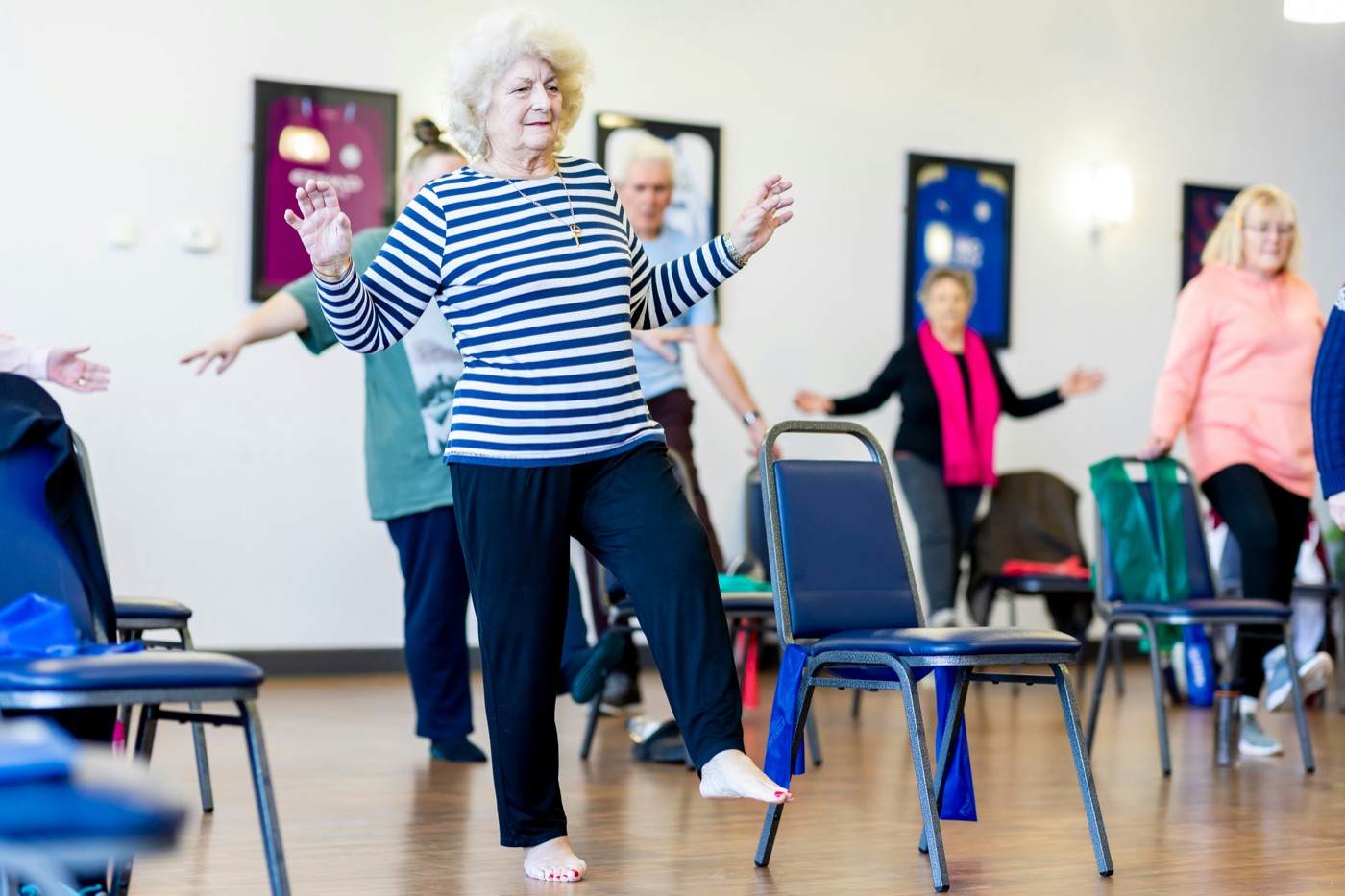
Most mobility loss after 40 isn't inevitable aging — it's reversible build-up from postural adaptation, reduced movement variety, soft-tissue adhesions, and muscle imbalances. A four-part framework restores it: targeted soft-tissue work, a five-minute daily movement practice, strength training through full ranges, and monthly professional maintenance.
Here's something Luke Stokes hears regularly from clients in their 40s and 50s: "I don't know what happened. I used to be able to do this easily."
They mean touching their toes. Turning their head to check a blind spot. Reaching overhead without a pinch. Getting up from the floor without a complex negotiation with gravity.
What happened is not inevitable. It's the consequence of a largely predictable set of factors that most people don't address until they're symptomatic. The good news is that those factors are mostly reversible. Mobility lost to disuse, postural adaptation, and accumulated soft-tissue restriction can largely be restored with the right approach.
Here's a practical framework for Tampa Bay residents who want to take this seriously.
Why Mobility Declines After 40 (The Real Reasons)
Aging does affect connective tissue. Collagen cross-linking increases, fascia becomes slightly less hydrated and elastic over time. This is real. But it accounts for far less mobility loss than most people assume.
The bigger contributors are:
- Accumulated postural adaptation: years of desk work, driving, and phone use have shortened specific muscles and restricted specific joints in predictable patterns
- Reduced movement variety: as life and careers stabilize in your 30s, most people move in a narrower range of patterns. Joints that don't move through their full range regularly lose that range.
- Soft-tissue adhesion build-up: minor injuries, repetitive strain, and sustained positions create adhesions that accumulate over years and progressively limit range of motion
- Muscle imbalances: certain muscles become chronically overworked (upper traps, hip flexors, lumbar erectors) while their antagonists weaken. This creates pull patterns that restrict movement.
Notice that none of these are "just aging." They're all addressable.
The Framework: Four Elements of Lasting Mobility
1. Targeted Soft-Tissue Work
The most efficient path to recovering lost range of motion is regular assisted stretching and massage therapy with a skilled therapist. A therapist can find and address adhesions and restrictions that you simply can't self-treat, and the results are dramatically faster.
For most people over 40 with mobility concerns, Luke recommends starting with bi-weekly sessions for 6 to 8 weeks, then transitioning to monthly maintenance. Within 4–6 sessions, most clients notice significant improvement in their benchmark areas, the movements that prompted them to seek help in the first place.
2. Daily Movement Practice (5 Minutes Is Enough to Start)
You do not need a 90-minute yoga class every day to maintain mobility. What you need is consistent, daily movement through the specific ranges your body needs to keep.
A minimally effective daily mobility practice for most Tampa Bay desk workers and recreational athletes:
- 90/90 hip rotations: 60 seconds per side
- Thoracic rotation with a foam roller: 60 seconds
- World's greatest stretch: 5 repetitions per side
- Chin tucks and cervical retraction: 10 repetitions
- Dead hang (if you have access to a bar): 30 to 60 seconds
That's 5 to 7 minutes. The goal isn't to stretch aggressively. Move your joints through their available range daily so the nervous system maintains, rather than loses, that range.
3. Strength Training (With an Emphasis on Range of Motion)
Strength training is one of the most effective mobility tools available, but only if you train through full ranges of motion. A squat that only goes to parallel doesn't maintain hip mobility the way a full-depth squat does. A shoulder press that keeps the elbow in front of the ear doesn't maintain overhead range.
The principle of "strength in length," building strength at the ends of your available range. This is highly effective for both improving and maintaining mobility over time.
4. Regular Professional Maintenance
Even once you've regained significant mobility and established good movement habits, your body accumulates restriction from the demands of life. Monthly maintenance massage or stretch sessions function like oil changes. They prevent problems rather than fixing them after they've developed.
Luke's monthly membership clients in the 40–60 age bracket consistently report that their quality of life is meaningfully better on the months they keep their maintenance appointments vs. the months they skip them.
"The goal isn't to feel young. The goal is to feel like yourself. The way you moved when you weren't paying attention to it. That's achievable at 45, at 55, and beyond." — Luke Stokes, LMT
What a First Session Looks Like for Someone Over 40
Luke's approach with clients who come to him specifically with age-related mobility concerns:
- A thorough conversation about history, symptoms, goals, and lifestyle
- Movement assessment: range of motion in the cervical spine, shoulders, thoracic spine, hips, and hamstrings
- A combination massage and assisted stretching session targeting the identified restrictions
- Clear feedback about what he found, what improved, and what would benefit from continued work
- A recommendation for a treatment cadence based on findings and goals
There's no hard sell and no minimum commitment required. The goal of the first session is to give you useful information and a real experience of what the work can do.
Tampa Bay's Climate Is an Advantage
One genuinely positive note for mobility work in Tampa Bay: the warm climate year-round means your muscles are rarely cold and contracted from temperature. Tissue mobility is consistently higher in warm environments, which means your maintenance work goes further and your improvement rate is faster than it would be for the same person in a cold-weather city.
This is a real physiological advantage. Use it.
Getting Started
Dawn Wellness works with clients across St. Petersburg, Clearwater, Tampa, the Pinellas beaches, and throughout Hillsborough County. All sessions are mobile. Luke comes to your home, condo, or office.
Start with a free 15-minute phone consultation. Tell Luke what's changed about how you move, what hurts, and what you'd like to get back. He'll give you an honest assessment of what's possible and what the path looks like.
Frequently Asked Questions
Why does mobility decline after 40?
Aging does change connective tissue, but that accounts for far less mobility loss than most people assume. The bigger drivers are reversible: accumulated postural adaptation from desk work and driving, reduced movement variety, soft-tissue adhesion build-up, and muscle imbalances where certain muscles stay overworked while their opposites weaken.
Can you regain mobility after 40?
Yes. Most mobility lost to disuse, postural adaptation, and soft-tissue restriction can be largely restored. A four-part framework works well: targeted soft-tissue work (assisted stretching and massage), a short daily movement practice, strength training through full ranges of motion, and regular professional maintenance.
How long does it take to improve mobility after 40?
For most people over 40, starting with bi-weekly assisted stretching and massage for six to eight weeks, then transitioning to monthly maintenance, produces noticeable improvement in benchmark movements within four to six sessions.
How much daily stretching do I need to maintain mobility?
About five to seven minutes is enough to start. A simple daily routine — 90/90 hip rotations, thoracic rotation on a foam roller, the world's greatest stretch, chin tucks, and a dead hang if you have a bar — keeps your joints moving through their full range so your nervous system maintains rather than loses that range.